
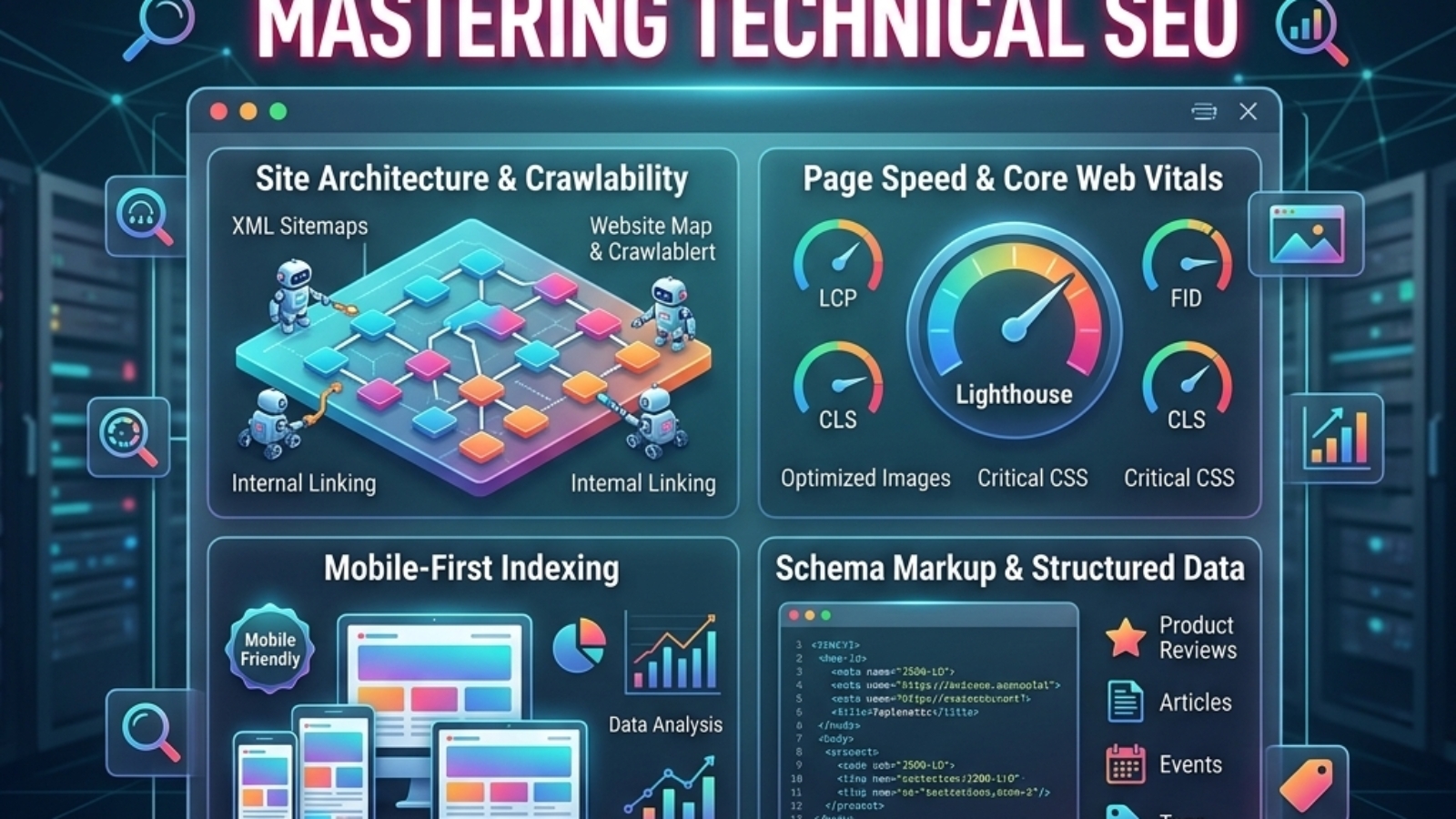
A website can have excellent content and attractive design, yet still struggle in search results if its technical foundation is weak. Technical SEO in Rawalpindi, Islamabad, Pakistan focuses on improving the structure, performance, accessibility, and technical health of a website so search engines can efficiently crawl, understand, and index its pages.
Technical SEO isn’t about making a website complicated. In fact, the goal is often the opposite: create a clean, efficient, and easy-to-understand website for both search engines and visitors.
What Is Technical SEO?
Technical SEO is the process of optimizing the technical parts of a website that influence how search engines discover, crawl, render, and index its content.
It works alongside on-page SEO, content marketing, local SEO, and link building. While content explains what a page is about, technical SEO helps ensure that search engines can properly access and process that page.
Important technical areas include:
- Website speed
- Mobile usability
- Crawlability
- Indexing
- XML sitemaps
- Robots.txt
- URL structure
- Redirects
- Canonical tags
- HTTPS
- Structured data
- Website architecture
- Broken links
How Technical SEO Supports Search Visibility
Search engines use automated systems to discover and process web pages. If important pages are blocked, difficult to access, duplicated, or poorly structured, their visibility may be affected.
A technically healthy website gives search engines a clearer path through its content. It also creates a better experience for people who visit the site.
Why Technical SEO Matters for Businesses
Technical problems can quietly affect a website. A business owner might see a beautiful website on their screen while search engines encounter broken links, slow pages, duplicate URLs, or indexing problems.
A strong technical foundation can help businesses:
- Make important pages easier to discover.
- Improve website usability.
- Support faster page experiences.
- Reduce crawl and indexing issues.
- Create a clearer website structure.
- Support other SEO activities.
- Provide a better experience for mobile visitors.
Technical SEO doesn’t guarantee a particular ranking position. Search visibility depends on many factors, including relevance, content quality, competition, authority, and search intent. Still, fixing technical barriers is an important part of a healthy SEO strategy.
Technical SEO and User Experience
SEO and user experience often go hand in hand. Visitors don’t want to wait for a page to load, struggle with confusing navigation, or encounter broken pages.
Simple improvements such as better navigation, faster loading, readable layouts, and mobile-friendly design can make a website easier to use while also strengthening its technical foundation.
Website Crawling and Indexing
Crawling and indexing are fundamental parts of search engine visibility.
Crawling involves search engine systems discovering and accessing URLs. Indexing involves processing and storing information about pages that may be eligible to appear in search results.
Technical SEO helps ensure that important pages aren’t accidentally hidden or made unnecessarily difficult to process.
XML Sitemaps
An XML sitemap provides search engines with information about important URLs on a website. It can be particularly useful for large websites, websites with many pages, and sites where new or updated content is published regularly.
A sitemap should be maintained properly and should not simply contain every URL without consideration.
Robots.txt and Crawl Management
A robots.txt file provides instructions to crawlers about areas of a website they should or shouldn’t request.
It’s important to configure it carefully. Accidentally blocking important resources or pages can create SEO problems, so technical changes should be tested before implementation.
Website Speed and Core Performance
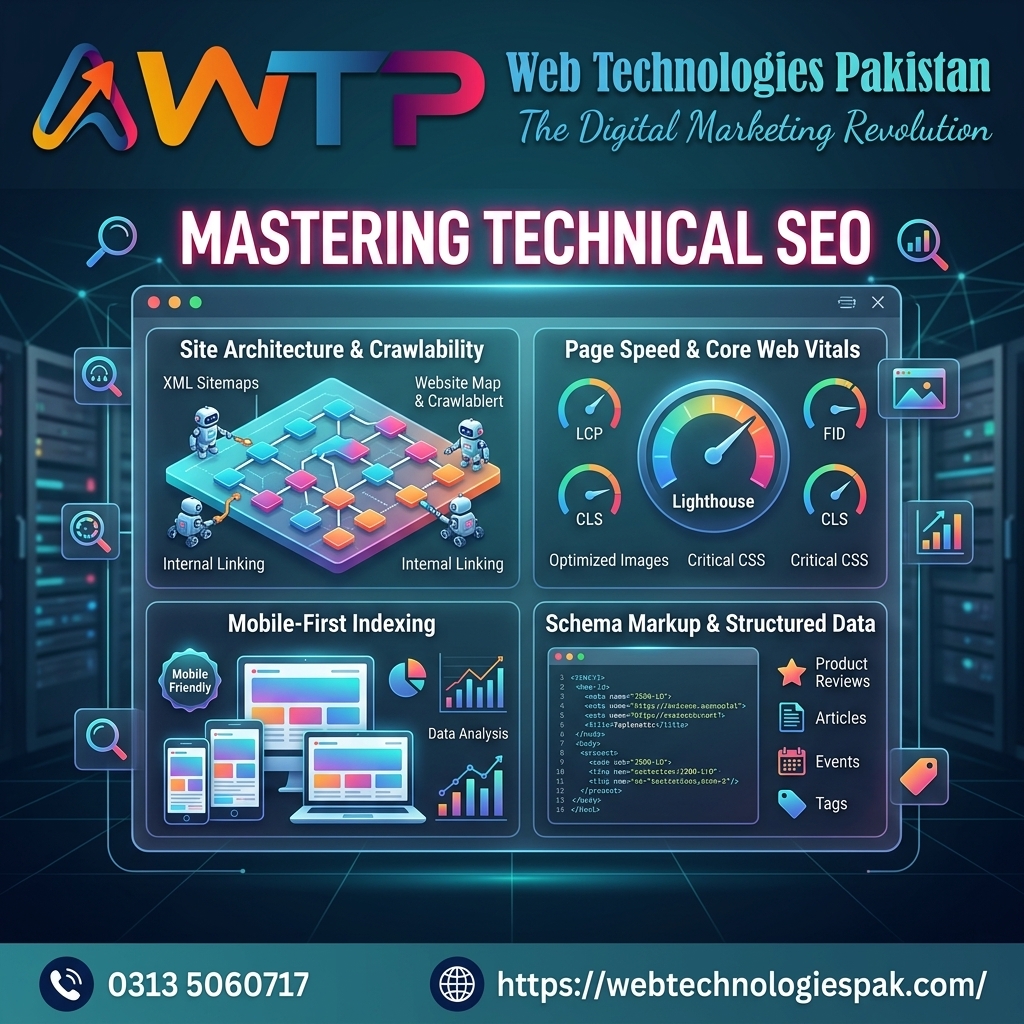
Website performance matters because slow pages can frustrate visitors. Performance optimization can include improving server response times, compressing images, reducing unnecessary scripts, using efficient caching, and optimizing page resources.
Core Web Vitals
Core Web Vitals are a group of user-focused performance measurements associated with loading performance, responsiveness, and visual stability.
Improving these areas can make websites feel faster and more stable. However, performance should be viewed as part of the broader user experience rather than as a single ranking shortcut.
Mobile-Friendly Website Optimization
Mobile devices are a major part of modern web browsing. A website that works well on desktop but becomes difficult to use on a phone can lose potential customers.
A mobile-friendly website should provide:
- Responsive layouts
- Readable text
- Easy-to-use navigation
- Properly sized buttons
- Fast loading
- Accessible menus
- Content that works across different screen sizes
Businesses in Rawalpindi and Islamabad can particularly benefit from ensuring their websites provide a smooth experience for visitors using smartphones.
URL Structure and Website Architecture
A logical website architecture helps users and search engines understand how pages relate to one another.
URLs should generally be descriptive, readable, and organized logically. Clear categories can also make large websites easier to manage.
Internal linking is another important part of site architecture. Relevant links can help visitors discover related information while helping search engines understand the relationships between pages.
Canonical URLs and Duplicate Content
Large websites can sometimes create multiple URLs that display similar or identical content. This can happen through product filters, tracking parameters, printer-friendly versions, or other technical configurations.
Canonicalization helps communicate which URL should generally be treated as the preferred version of a page.
Proper implementation can reduce confusion around duplicate or near-duplicate pages.
HTTPS and Website Security
HTTPS encrypts information exchanged between a website and its visitors. It has become a standard part of modern website security.
Businesses should maintain valid security certificates and ensure that pages, images, scripts, and other resources load securely. Mixed-content problems should also be identified and corrected when they occur.
A secure website helps create confidence for visitors, especially when users submit forms or make purchases.
Structured Data and Search Understanding
Structured data provides machine-readable information about certain types of content on a webpage.
Depending on the website, structured data can describe things such as:
- Products
- Organizations
- Events
- Articles
- Breadcrumbs
- Reviews where applicable
Correct structured-data implementation can help search engines better understand page content and may support eligibility for certain enhanced search-result features. It doesn’t guarantee that enhanced results will appear.
Technical SEO for Local Businesses
Local businesses need more than a strong Google Business Profile. Their websites should also provide clear business information and a technically reliable experience.
For businesses targeting Rawalpindi and Islamabad, technical optimization can support local SEO by ensuring location-related pages are accessible, mobile-friendly, fast, and logically connected.
Important information should be presented consistently, particularly business details and service-area information.
Common Technical SEO Problems
Some technical problems are easy to overlook. Regular audits can help identify issues before they become larger obstacles.
Common problems include:
- Broken internal links
- Slow-loading pages
- Missing or incorrect redirects
- Poor mobile usability
- Incorrect canonical tags
- Duplicate pages
- Indexing errors
- Incorrect robots.txt rules
- Missing XML sitemaps
- Unnecessary URL parameters
- Mixed-content security issues
Fixing these problems requires careful testing. A technical change that seems small can sometimes affect many pages across a website.
How Web Technologies Pakistan Approaches Technical SEO
At Web Technologies Pakistan, technical SEO can be treated as a structured process rather than a one-time checklist.
The process can begin with a technical audit to identify crawlability, indexing, performance, mobile, architecture, security, and other website issues. After prioritizing problems, improvements can be implemented and monitored.
A practical workflow may include:
Technical Audit → Crawl Analysis → Indexing Review → Performance Check → Mobile Review → Architecture Analysis → Technical Fixes → Testing → Monitoring
This approach helps businesses focus on issues that have a meaningful impact instead of making random technical changes.
Technical SEO should also work closely with content and on-page optimization. There’s no point having technically perfect pages if those pages don’t provide useful information for the people searching for them.
Frequently Asked Questions
1. What is Technical SEO?
Technical SEO involves optimizing the technical structure and performance of a website to help search engines crawl, understand, and index its content effectively.
2. Is Technical SEO important for small businesses?
Yes. A small website can still experience issues involving speed, mobile usability, indexing, redirects, broken links, and website architecture. Addressing these problems can create a stronger foundation for SEO.
3. How often should a technical SEO audit be performed?
The ideal frequency depends on the website. Large or frequently updated websites may need more regular monitoring, while smaller sites can perform scheduled audits and check technical issues whenever significant changes are made.
4. Can Technical SEO improve website speed?
Technical SEO can identify and address factors that contribute to poor performance, such as oversized images, inefficient scripts, caching problems, and unnecessary resources. Actual speed improvements depend on the website and its infrastructure.
5. Does Technical SEO guarantee higher Google rankings?
No. Technical SEO cannot guarantee specific rankings. Search visibility also depends on content relevance, quality, competition, authority, search intent, and many other factors. Technical optimization helps remove barriers and build a healthier website foundation.
Conclusion
A strong website needs more than attractive pages and useful content. It also needs a reliable technical foundation that allows visitors and search engines to access information efficiently.
Technical SEO in Rawalpindi, Islamabad, Pakistan can help businesses address issues related to crawling, indexing, performance, mobile usability, security, site architecture, and structured data. When these technical elements are handled properly, they provide a stronger foundation for broader SEO efforts.
With regular audits, careful implementation, and ongoing monitoring, businesses can keep their websites healthier and more search-friendly. Web Technologies Pakistan can support this process with a practical approach focused on technical quality, usability, and sustainable online growth.