
In the highly competitive environment of digital marketing, it is crucial to count on maintaining the integrity of your SEO. One of the most crucial and neglected aspect of SEO is canonical tags usage. We, at Web Technologies Pakistan (A Top SEO Company Rawalpindi / Islamabad), know about how important technical seo is for increasing visibility of your site and to get rid of duplicate content through strategies such as canonical tags. In this article, you will find a detailed list of canonical tags, the actual benefits they offer, and how to use them properly.
What Are Canonical Tags?
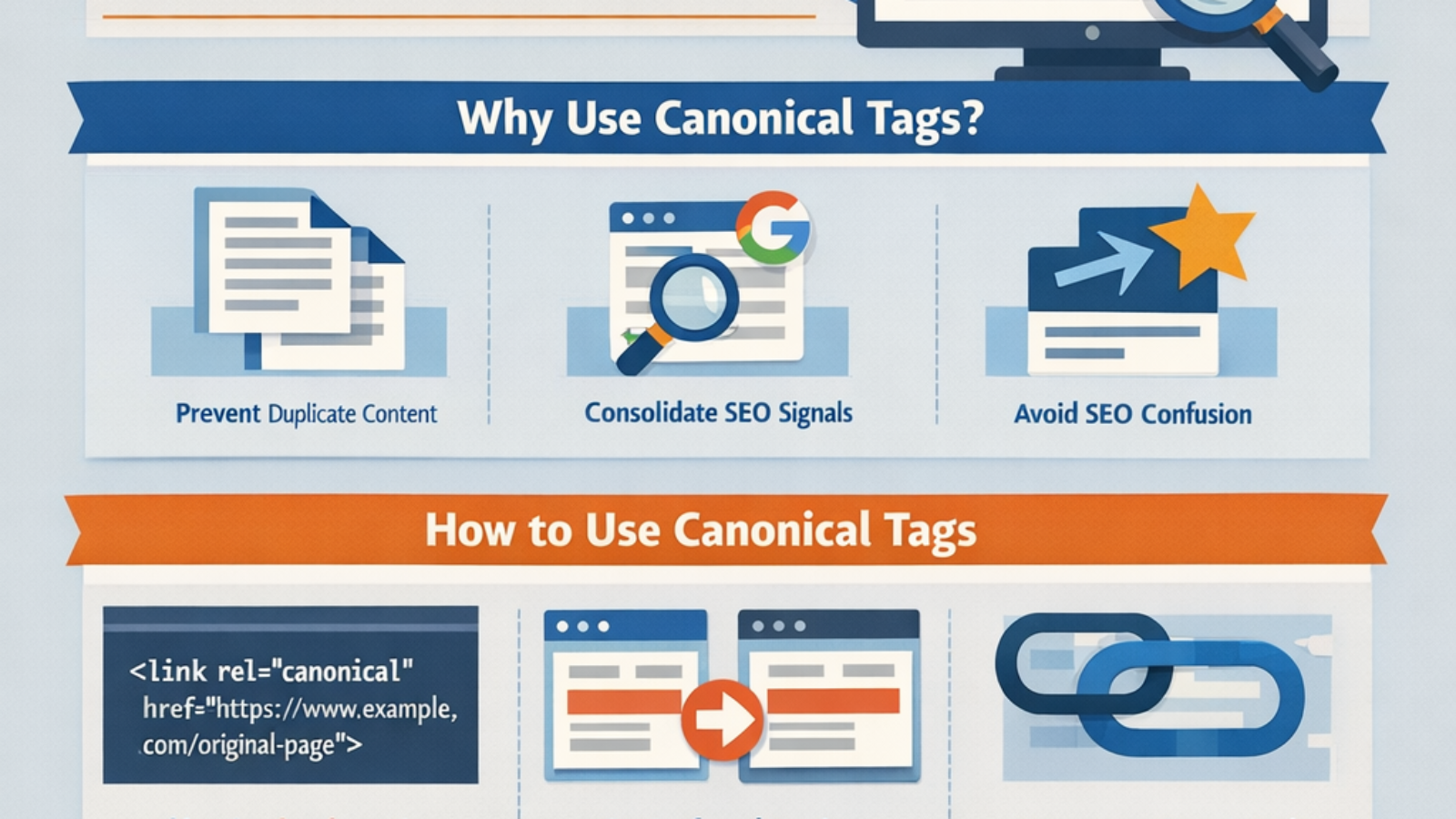
What is a canonical tag, anyway? A canonical tag, also known as the “rel=canonical” tag is an HTML element that helps webmasters prevent duplicate content issues. In other words, it informs Google which URL to trust when several pages contain identical or similar content.
There are several situations that can lead to duplicate content including:
- Several URLs directed to the same page
- Print-friendly versions of pages
- Tracking parameters in URLs
- E-commerce product variations
Without adequate canonicalization search engines may have trouble determining which page to rank, and this could end up watering down your SEO.
Why are canonical tags important for SEO?
The importance of the canonical tags in SEO is huge. Here’s why they matter:
1. Prevent Duplicate Content Penalties
Search engines might penalize a site if the content is copied with less ranking signals in any given page. With a canonical tag, all those signals are combined into one URL, which protects your site’s SEO.
2. Improve Crawl Efficiency
By referencing to the previous point, search engine bots have a fixed crawl budget. If you set canonical URLs, then search engines are able to concentrate on important pages for better indexing.
3. Maintain Link Equity
When you have duplicate pages, then backlinks might be divided between the URLs. Canonical tags are used to transfer link equity, which elevates the ranking performance for one of two identical pages.
4. Enhance User Experience
When you point people to a single master page, it creates one complete way of presenting that content, cutting down on confusion and improving user experience.
How to Implement Canonical Tags
Canonical tags are a must for SEO success to ensure they’re correctly implemented on all your key pages. Here’s a step-by-step guide:
1. Identify Duplicate or Similar Pages
Begin by reviewing your website, and look for pages with content that is closely or exactly alike. Tools like Google Search Console and SEO audit tools can assist in finding these duplicates.
2. Select the Preferred URL
Choose the page that is to be considered as a master version. Some things to remember: is the content as complete as it can be from a page speed and SEO perspective.
3. Canonial Tag in Your HTML Head Section
Place the following tag in the <head> section of preferred pages:
<link rel=”canonical” href=”https://www.example.com/preferred-page” />
Replace the URL with a desired page’s address. This lets search engines know that these page should be recognized as the primary version.
4. Use Consistent URLs
Make the URL in the canonical tag as consistent as possible and include HTTPS where you can while not using parameters that might be confusing search engines.
5. Monitor and Audit Regularly
SEO is an ongoing process. Regularly review canonical tags and adjust as pages are updated or removed.
Best practices for canonical tags
How to use canonical tag in actual practice Using canonical tags correctly can be quite tricky. Here, let us look at certain dos and don’ts shared by Web Technologies Pakistan an SEO Company in Rawalpindi, Islamabad :
- Make Responsive AdSense: I framed your website designing in such a manner that it suits every mobile screen, tablet, or desktop.
- Self-Referencing Canonical Tags: Everypage that is created, should contain a canonical tag to itself, and no other URL.
- Don’t Cross-Domain Canonicalize: Non-Owned Content: Do not use cross-domain canonical tags unless you own the domain.
- Canonicalize URL Variations: Experiment the with/without trailing slash or query parameters.
- Don’t Use Canonical Tags Instead of Redirects: A canonical tag is a suggestion, not a redirect. You can’t trust them to be a substitute of the good 301 redirects.
- Use Full URLs: Whenever possible, use the complete uniform resource locator instead of relative paths so that search engines can better understand your world.
Common Mistakes to Avoid
And yes, with canonical tags these inproper use can harm SEO. Avoid these mistakes:
- Setting canonical tag to garbage or useless pages
- Using more than one canonical tag on a single page
- Ignoring mobile / international versions of pages
- Never updating canonical tags in redesigns or migrations
Secondary Keywords to Include
You can also sprinkle some related keywords in a natural way, to improve search visibility e.g.
- SEO best practices
- Duplicate content SEO
- Technical SEO strategies
- Website ranking improvement
- URL canonicalization
These secondary keyword variations assist (but don’t over-optimize) the main focus keyword, Top SEO Company in Rawalpindi, Islamabad.
FAQs About Canonical Tags
1. Do canonical tags help in search rankings Canonicalization and SEO?
The use of canonical tags assist in the consolidation of SEO signals and also minimizes duplicate content issues, this means better search rankings.
2. Do I need to canonicalize every page?
Not all pages need canonical tags but are needed for pages with duplicate or similar contents.
3. Can canonical tags solve the issue of duplicate content on e-commerce websites?
Yes, canonical tags are especially beneficial for product variants, filter options and paginated pages.
4. Should you use canonical tags instead of 301 redirects?
No, canonical tags are advisory. 301 redirects are still needed for moved pages, at least on a permanent basis.
5. How do I know if canonical tags are effective?
Check canonical tags with SEO audit tools or by looking at page source. You can also check for canonical issues in Google Search Console.
Conclusion
Canonical tags are a basic tool used in technical SEO and enable sites to resolve issues of duplicate content, consolidate link equity, and produce more favorable indexing from search engines. When rolled out properly, companies can uphold a solid foundation in SEO and improve the user experience.
As a Top SEO Company in Rawalpindi, Islamabad we have expertise in helping business navigate through technical SEO optimization things such as ensuring correct canonical tags to structured data to more complicated thing like pagination, page whips and others. Knowing the power of canonical tags and how to use them correctly will help your website run smoothly in search, which means a better site for users.